Observation 2/28/2026 local_see
Extreme Windloading Observed on Gothics North Face
Gothics North Face
Observation Details
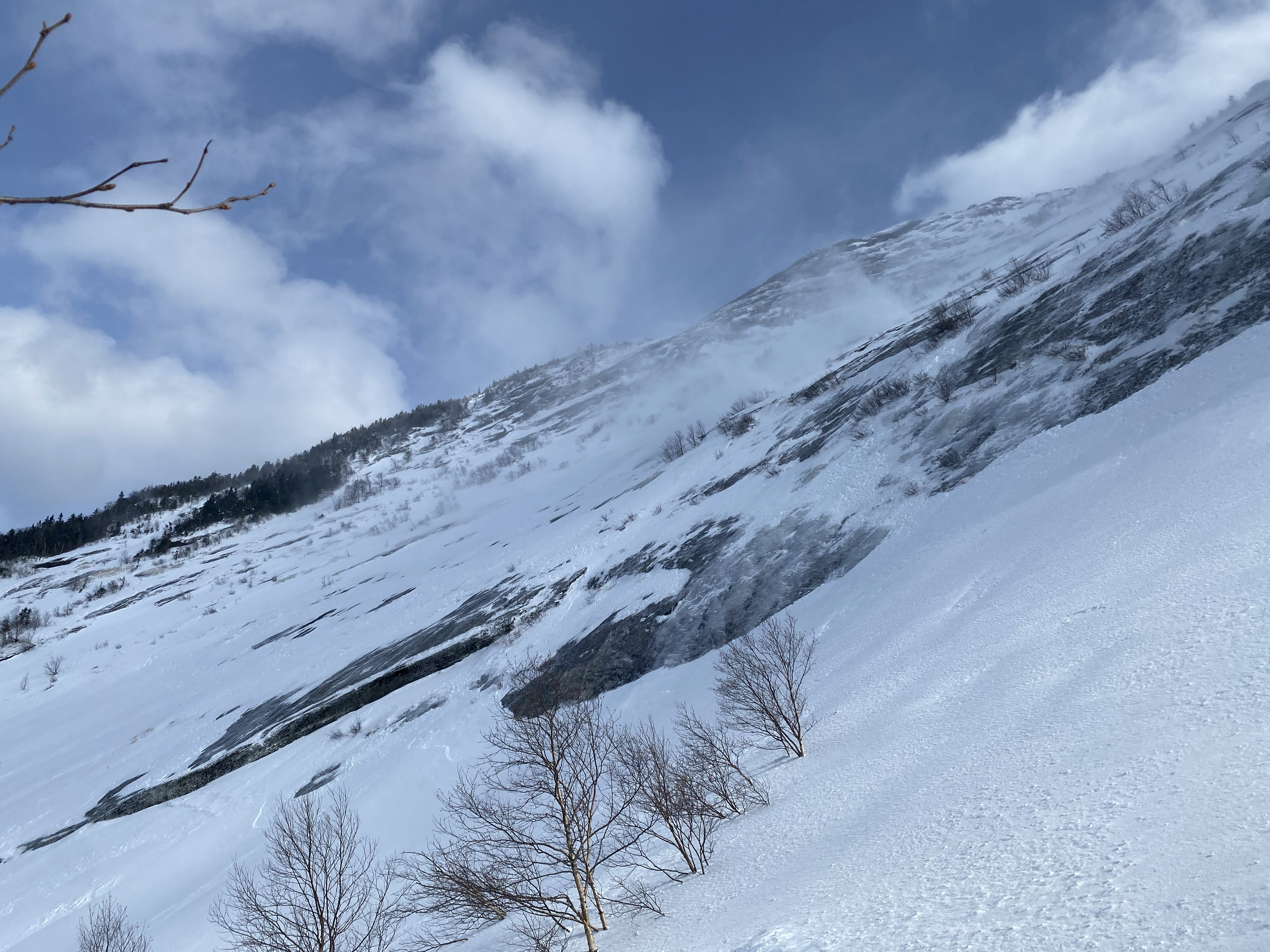
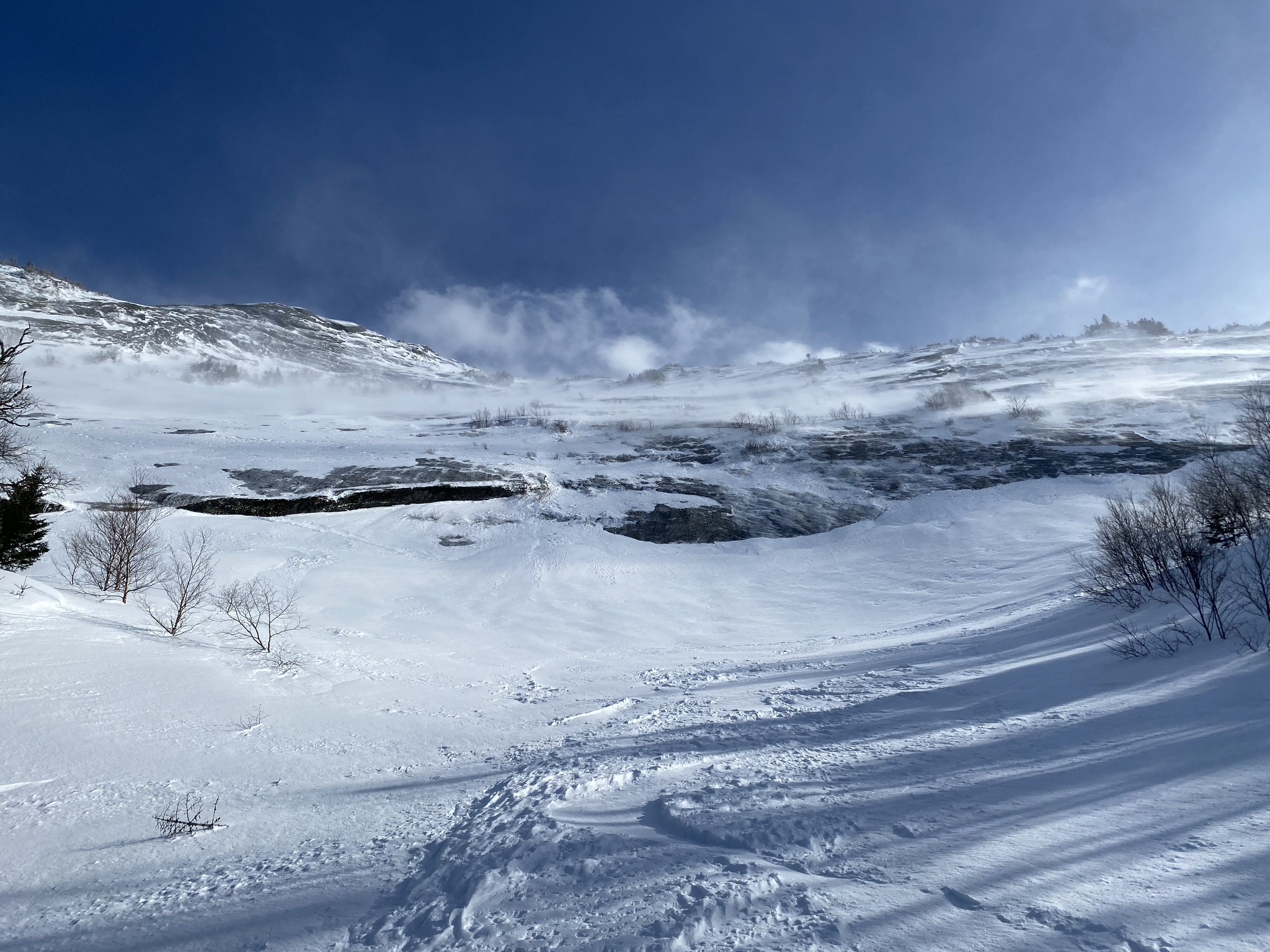
The ambient temperature already exceeded freezing when we began our tour at 8am in John's Brook Valley. Snow off trail was wet and clumpy in the valley, about 1500' elevation. Between 9am-11am We experienced moderate mixed precipitation which turned to sleet at about 2500' elevation. The snow quality off trail was noticeably less affected by warming starting at around 2800'. The wind, as forecasted, was also very apparent throughout the day as we witnessed large trees swaying on the approach. We were prepared for a climb and splitboard descent of the Gothics North Face and voiced early concerns about the wind. Once we popped out of the drainage we encountered heavy winds and fog covering the face so we proceeded carefully up the lower chutes. While skinning up, the southerly wind was blowing snow down slope and we experienced variable snow conditions ranging from unconsolidated snow and stubborn windboard. We did not experience any signs of instability while skinning up these chutes but noted the dynamic effects of the wind. We eventually topped out at the top of the trees/bushes (around 3800-4000') below the main face and made the decision to not proceed upwards due to lack of visibility. While eating lunch at noon and discussing our descent options, the clouds eventually cleared, revealing extreme signs of drifting snow and windloading upslope.
We observed snow blowing down the face and mostly depositing the snow beneath the cliffs of the main face (see videos/ photos attached) forming large notable wind slabs just below the cliffs in the middle and right side of the face (and likely the left side of the bowl as well) which could pose danger for traveling onto the face. It was also evident that cliffs on the face were collecting snow below them and a lot of the lines were stripped of snow revealing bare, thin ice.
We did not observe any instability or reactivity in the snow when snowboarding down the lower chutes and found a mix of soft turns and stubborn windboard. We were able to ride a bunch of fun laps, constantly evaluating the dynamic conditions (for reference, our skintrack filled in after every run). Quick hand sheer tests showed the thickest windslabs to be about 2” under the convex rolls, which we tried to avoid. We continued to not observe instabilities in these chutes until later in the day (2:30pm) when we observed small one to two inch thick pieces of windboard start to shed when traversing the slope (but did not propagate/ cause shooting cracks). We hypothesized that the snow blowing off the north face was mostly loading the upper slopes and minimal snow was available to load the lower chutes we were riding which is maybe why we didn't observe as much instability where we were riding. The strong gusts of wind continued throughout the day, even when we got back to the trailhead around 6pm.